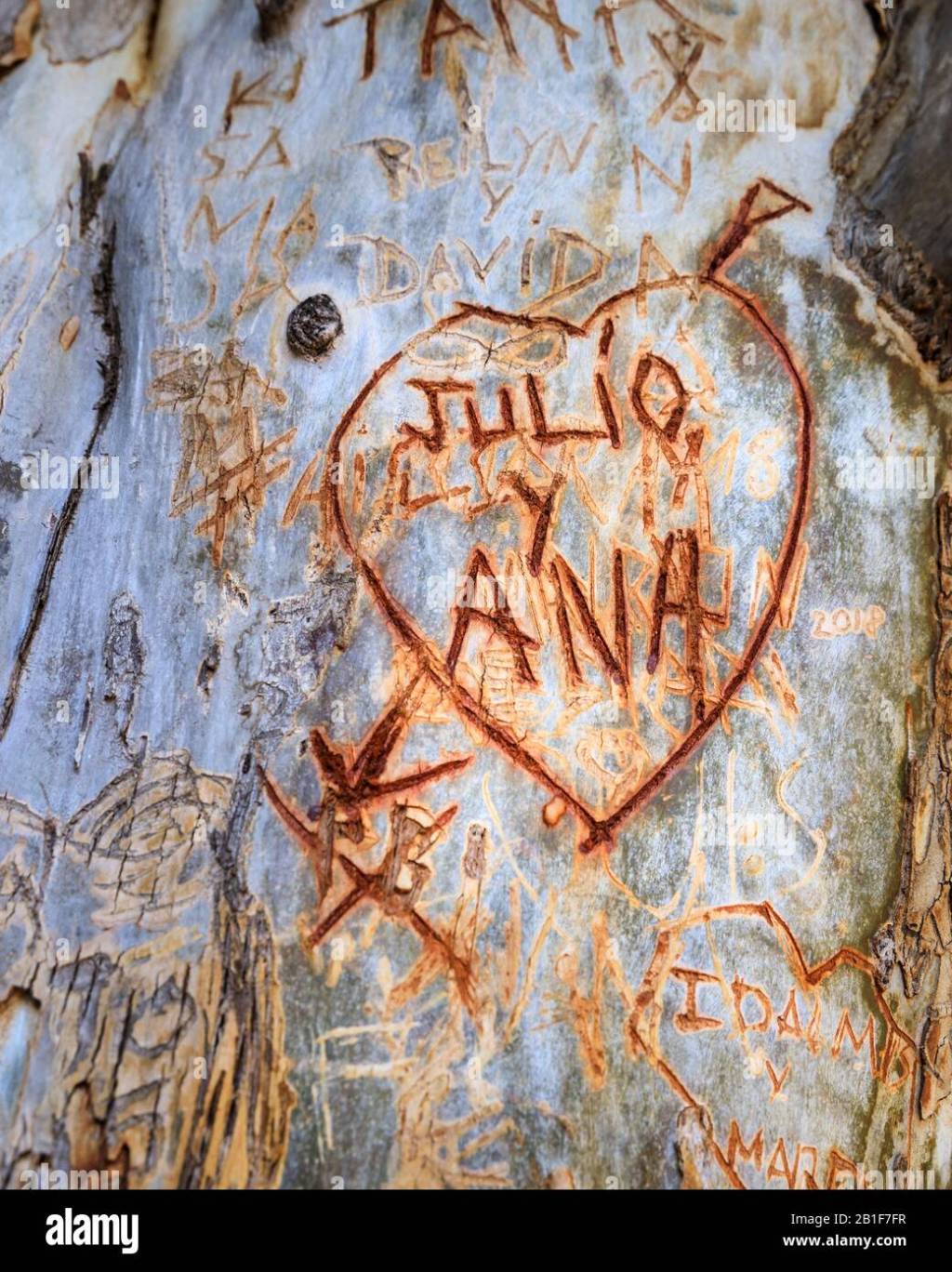
A picture is said to be worth a thousand words.
Sometimes couples portray their love by carving their initials into a tree.
Their love demanded a visual demonstration of itself, a physical reminder of what they long to
make permanent.
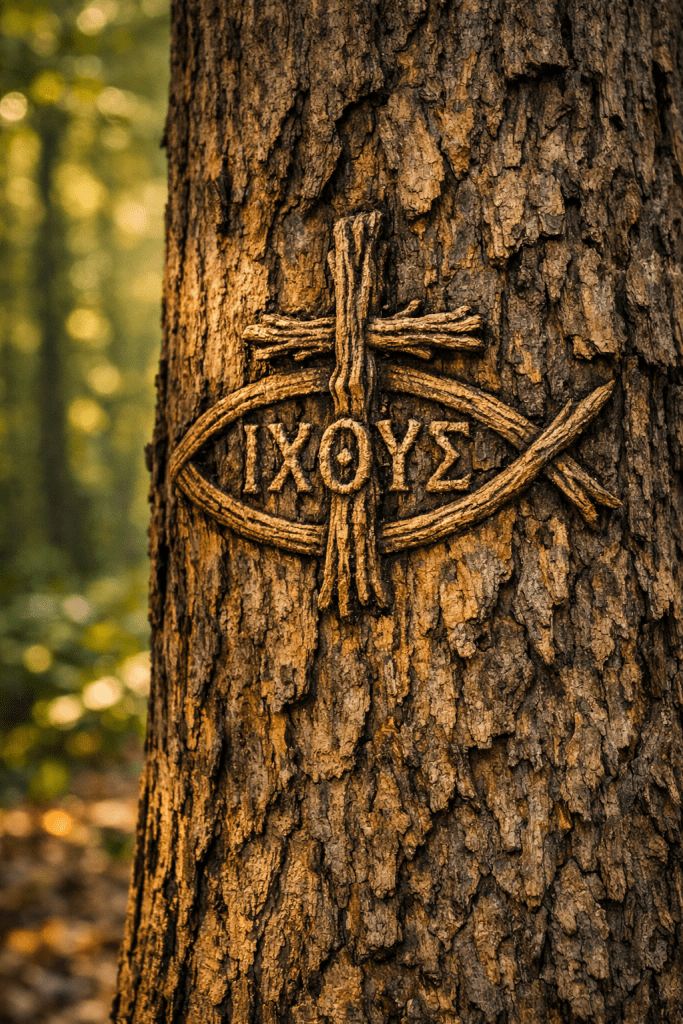
There is another carving in a tree that goes far beyond this sentiment.
The cross bore the inscription “This is the King of the Jews.”
Jesus did not carve His initials in that Tree; He gave His life upon it.
In John 10:18 He told us His life was not taken from Him; He gave it freely. This death was not
defeat; it was the greatest fulfillment of His love.
Do you believe He would ask of us something He was unwilling or incapable of doing?
The God who says He hates divorce describes Himself as the Bridegroom and believers as
His bride. It goes all the way back to the covenant with Moses on the mountain, the giving of the
ten commandments was the betrothal ceremony.
But do you think He would divorce you?
I have succumbed to such thoughts when He feels far away and my faith is dry. It is easy to
project our human frailty onto Him. And I have given Him reasonable cause to divorce me.
What will He do when I disappoint Him, when I do not measure up?
If we look at our relationship with God as a marriage, why do we expect happily‑ever‑after
without the ups and downs that come with any relationship?
It is hard to comprehend why He can feel so far away and there could be a number of reasons.
Thing is, we see in the Word again and again that even times the Lord needed to discipline His
people it was temporary. God committed to Israel for the long haul; He is faithful and will
complete what He started in us as well.
A movement was started a number of years ago to encourage men to stay faithful in their
marriage called Promise Keepers. Our God is the original promise keeper!
A wedding ceremony is only the initial “I do,” and marriage is a daily reiteration of that “I do.”
We continue to say yes by making our commitment to our partner part of our decisions.
Our decision to make Jesus our Lord is the same. Agreeing with Jesus to be our Saviour is only
our first yes; our engagement. And our love and commitment must be chosen again and again.
Marriage is shaped in ordinary days, in sickness and health. Mountains and valleys, good times
and bad. Why should our relationship with God be any different.
At the same time, He is not only a Bridegroom. He is also Shepherd, King, Refuge, and Judge.
There is not a single attribute out of which He always operates. We cannot flatten Him to a single
predictable behaviour, His ways past finding out.
He is near to us, yet beyond full comprehension and to reduce Him to one trait makes Him
smaller than He is. His character has depth like light passing through a jewel; each angle reveals
a new aspect. Even a lifetime is not enough to see it all, we must continue to discover Him in
scripture.
There is far more mystery in God’s character than we are comfortable with.
I want to apply this truth to a question many people carry.
If God is good, why does He allow evil? Why does He not stop it? He could do that. We would be
correct to assume He is able. But if every act of evil were prevented, what would happen to our
ability to choose?
It puzzles me that people demand their rights with one breath and blame God for the state
of the world in the next.
We demand freedom and then raise our fists at God when we project our faulty ideas of
love onto Him. God, if You loved me, You would not have allowed such and such.
I have personally walked through the pain of that question, and do not want to trivialize it.
But love that cannot be refused is not love at all. The same freedom that allows us to love also
allows us to harm.
A world without evil might sound ideal, but it would also be a world without real choice.
What is your freedom worth to you? Would you give it up so that so others would not suffer?
To define good as the absence of evil is short‑sighted.
Were we to deny every person the power to choose evil, would we not be closer to living like
animals? Free will is not a small thing; it is the thing that gives humanity its dignity.
It is what beckons us to nobility. It makes the ability to reflect the character of God possible in a
way not seen in the rest of God’s creation. Scripture says in the Psalms that we are crowned with
glory and honor. That crown is not status; it is the ability to choose, to act in love, and even to
refuse to do so.
Revelation 4:9–11 And when the living creatures give glory, honor, and thanks to Him who sits on the throne, to Him who lives forever and ever, the twenty‑four elders will fall down before Him who sits on the throne, and they will worship Him who lives forever and ever, and will cast their crowns before the throne, saying, “Worthy are You, our Lord and our God, to receive glory and honor and power; for You created all things, and because of Your will they existed, and were created.”
When we speak of laying our crowns at His feet, we are not only honoring Him. It is a picture of
yielding the autonomy that crowns humanity.
Freedom is what He gave us; making Him Lord is our gift to Him.
The power to direct our own lives is placed back into His hands.
By our Lord giving His life on a cross He did everything within His power that He could do to end
suffering and still leave our freedom intact.
This is a picture of love more holy, generous, and noble than what we imagine love to be.
The cross is His answer when we ask why He allows suffering. He is the way out.
He is the escape from the pain we experience when others harm us.
It gives every person the choice to become the highest possible version of ourselves.
Or not.
Salvation was finished on the cross, yet the victory of that cross will only be fully seen when
our Lord returns.
For now, we live in the tension between. The gap between what is and what will be. This gap is
the place the intercessor stands.
Isaiah 59:14–16 Justice is turned back, And righteousness stands far away; For truth has stumbled in the street, And uprightness cannot enter. Truth is lacking, And one who turns aside from evil makes himself a prey. Now the Lord saw, And it was displeasing in His sight that there was no justice. And He saw that there was no one And was amazed that there was not one to intercede; Then His own arm brought salvation to Him, And His righteousness upheld Him.
The Lord invites us to stand with Him in that gap. To share in His sufferings and, as it says in
Amos 6:6, to mourn over the collapse of Joseph. The word translated “collapse” in this
verse is also, the word for “breach.”
The sovereignty of God and the will of man does not deny the reality of injustice and suffering.
But there was and is no one who can set it right but Him, and He has done it in a wondrous way.
He gave us far more than we deserve. He came to earth and gave His own life as the price of our
redemption. He died to give us the way out, but we curse Him for allowing the suffering we
ourselves cause.
It makes sense only to a mind unable to see truth.
We think ourselves enlightened and self‑sufficient, but we are blind and naked.
In His compassion He removes the veil that prevents us from seeing our sinful condition and
allows us to see Him as He is.
And that, my friends, is true freedom.
It is the furthest thing from my mind to offer a band‑aid for a serious wound. Jeremiah 8:11
Questions and doubts are rarely a matter of theological semantics, and I am not offering these
truths as a quick fix or a “magic wand” that makes suffering disappear. That is not how it
works.
No, we must do the work of renewing our minds by steeping ourselves in Scripture and allowing it to
instruct the way we live. And like David in the Psalms, we must be honest with God about our
confusion, hurt, and anger, and ask Him to speak to us personally.
As we do this, and as we ask God to help us each step, the truth gradually begins to heal our hearts.
This is the opposite of magic. God is better than magic, He is a Creator, and creation is a process
that unfolds over time. Each time we come to Him, another layer of healing reaches our
subconscious. This is how the Lord gives us a right spirit and a new heart to replace our stony one,
this repeated application of the balm of Gilead.
I am sorry; it is not easy or a quick fix. I have walked this road myself and it takes time but I would
not trade it for a life that had not been marked by suffering. Because of it I know God on a deeper
level than I would have without it.
The application of the blood, our Lord’s sacrifice on the cross is the cure, the medicine we need for
our healing.
So, come.
Come to Him and be honest about your pain and doubts. Spend some time with Him.
Lord Jesus, You know our confusion and where our sorrow has turned into anger. Thank You for
telling us You want us to come to You with our burdens.
Would You soften anything rigid in us and loosen any grip on anger we’ve held against You.
Heal us, Lord, give us the ability to see You rightly. Help us to trust Your mercy is already reaching for
us and may the truth of Your love be carved deeply into our hearts.
All the love my friends.
 lynnbusby.com
Leave a comment