The more I read the book of Jeremiah; the more I realize how little I know. Here we are, I am writing my third post about the priest and prophet. As I chisel, I discover I am merely scratching the surface of an iceberg that goes very deep under the waterline.
I mentioned last week, one of Jeremiah’s prophetic acts had a profound effect on me.
I was compelled to discover the biblical ramifications of this visual parable.
Here are the notes of my wander through the word. I long for it touch your heart as it did mine.
In the Books of Exodus, Leviticus, and Ezekiel, the priests wore linen garments symbolizing purity, consecration, and beauty. The priestly instructions given by the Lord Himself regarding how they were to be made.
One of these sacred garments the waistcloth, has alternately been defined as a linen undergarment, breeches, girdle or sash.
I admit, the word breeches jarred me. It reminded me of intercession, of standing in the breach. It was spelled differently, but close enough to make me pause. This was a very representation of their covenant with God and readiness to serve Him.
Exodus 28:2 “Make sacred garments for your brother Aaron to give him dignity and honor. Tell all the skilled workers to whom I have given wisdom in such matters that they are to make garments for Aaron, for his consecration, so he may serve me as priest. These are the garments they are to make: a breast piece, an ephod, a robe, a woven tunic, a turban, and a sash.”
Ezekiel 44:17 “When they enter the gates of the inner court, they are to wear linen garments; they must not wear any woolen garment while ministering at the gates of the inner court or inside the temple. They are to wear linen turbans on their heads and linen undergarments around their waists. They must not wear anything that makes them perspire.”
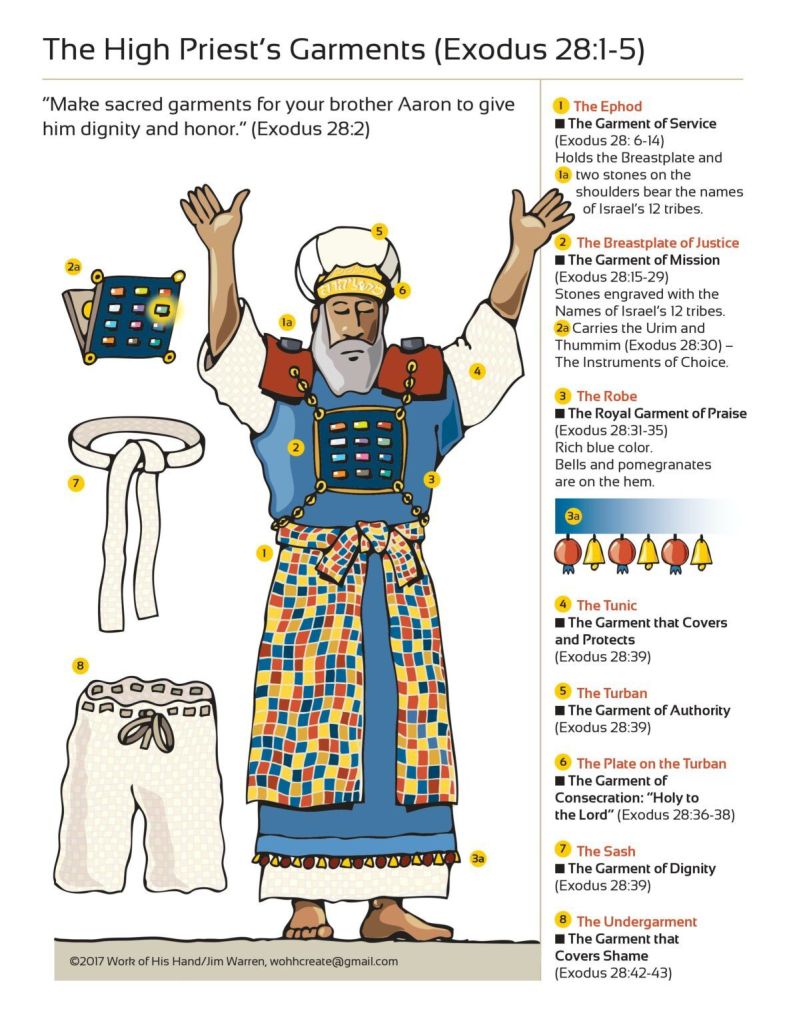
By varying translations the ‘waistcloth’ is translated as sash, breeches and undergarment.
God explains the symbolism of this particular article of clothing in this verse.
Jeremiah 13:11 “For as the undergarment clings to the waist of a man, so I made the entire household of Israel and the entire household of Judah to cling to Me,” declares the Lord, “so that they might be My people, for renown, for praise, and for glory; but they did not listen.”
Oh, my goodness, my heart aches a little when I read that. The pain of travail I mentioned last week? It returns to the pit of my stomach. The waistcloth’s importance washed over me. This was an intimate garment of breathable linen, not meant to produce sweat. Perhaps this was a whisper about a position given over performance earned.
And I absolutely needed to do a separate study on the word “cling.”
Why wouldn’t I, when God used that very word to describe His purpose for creating His people?
Surely it would appear elsewhere in Scripture.
I found many instances where God uses “cling” in ways that echo this same covenant intimacy.
It was used both positively and negatively, because sometimes it referenced people who chose to cling to their idols. Like a bride clinging to a lover instead of her husband.
Again and again, I saw the same purpose for which God created man: to cling to Him.
I encourage you to look them up.
I will mention just one thing, though. This idea of clinging isn’t isolated but is a pattern God uses to describe covenant intimacy
In Exodus 19 God made a marriage covenant with Israel. The meaning of a marriage covenant has remained from that time till today. It is the concept of ‘leaving and cleaving’ that takes place at marriage.
That word ‘cleave’ is similar to the word for ‘cling’ which God uses to describe the kind of relationship He desires to have with us.
Genesis 2, Matthew 19, Mark 10 and Ephesians 5 all describe that when a man and woman marry the two become one flesh.
1 Corinthians 6:17 tells me “He who joins himself to the Lord is one spirit with Him.” A beautiful portraying of marriage union.
I am to leave the world and cling to Him as a bride to a husband.
God says He created Judah and Israel to cling to Him in this same manner and proclivity.
Knowing now the holy intention behind the waistcloth, I have little doubt that the commands God gave Jeremiah concerning this garment would have weighed heavily on him.
The prophet understood the tragedy of a people meant to cling to God becoming spoiled and useless.
So, let’s go back to those verses.
Jeremiah 13:1 This is what the Lord said to me: “Go and buy yourself a linen undergarment and put it around your waist, but do not put it in water.”
2 So I bought the undergarment in accordance with the word of the Lord and put it around my waist.
3 Then the word of the Lord came to me a second time, saying,
4 “Take the undergarment that you bought, which is around your waist, and arise, go to the Euphrates and hide it there in a crevice of the rock.”
5 So I went and hid it by the Euphrates, as the Lord had commanded me.
6 After many days the Lord said to me, “Arise, go to the Euphrates and take from there the undergarment which I commanded you to hide there.”
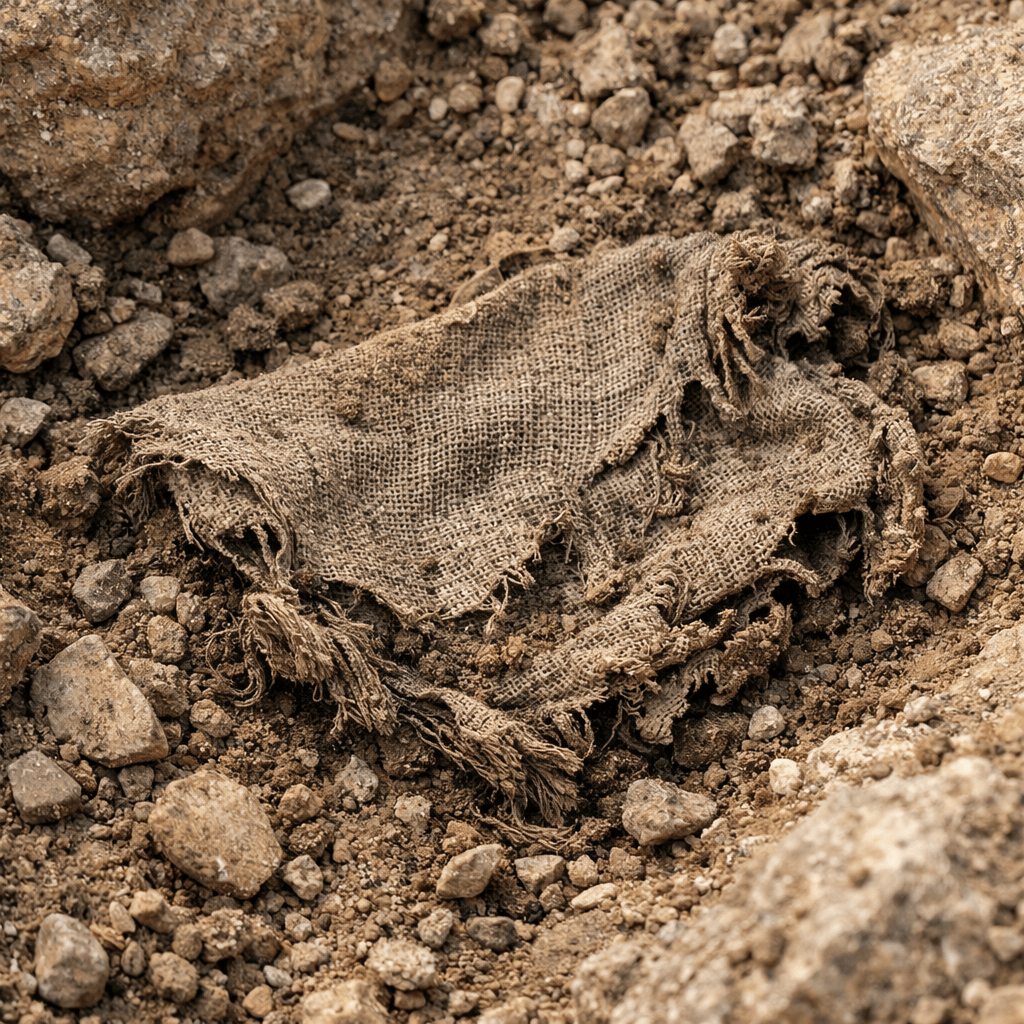
7 Then I went to the Euphrates and dug, and I took the undergarment from the place where I had hidden it; and behold, the undergarment was ruined, it was completely useless.
God tells Jeremiah the ruined linen garment symbolizes Judah becoming spiritually corrupted.
They were now useless as priests to the nations because of their pride and idolatry.
This prophetic act seemed important and momentous. I needed to know more.
Prophets (like Elijah in 1 Kings 18) and messengers lifted up their robes and tucking them into their belt in order to run.(2 Samuel 18)
In biblical times they wore long robes. They were great for dignity but terrible when you needed to do something like run with a message to another city, or engage in battle. So flowing garments were fastened securely with a waistcloth or sash so a person could move freely.
We might hear this like the ancient equivalent of being ready, “locked and loaded.”
Where the garment was placed on the body, is important. In Hebrew thought, the loins represented vigor and capacity. What protects your purity and girds your loins represents what equips and stabilizes you.
Job questioned divine justice, and God called him to gird up his loins like a man before the Creator of the cosmos. To get ready to present his case.
Ephesians tells us to gird ourselves with truth refers to this same kind of action. Tighten your belt, gather your robes, and prepare to run your race.
This pure linen waistcloth of the priest also covered the kidneys, what they called the “reins” of a man: the inner thought life and motives.
Or, in Judah’s case, it represents what demoralizes and renders a person useless when combined with the worship of other gods.
This isn’t the only place linen garments carry spiritual weight, though.
David, the warrior king’s story gives another glimpse.
In 2 Samuel we find the story of David when he brought the ark of the covenant back to Jerusalem.
2 Samuel 6:14 And David was dancing before the Lord with all his strength, and David was wearing a linen ephod. 15 So, David and all the house of Israel were bringing up the ark of the Lord with joyful shouting and the sound of the trumpet.”
David was worshipping God dressed only in the linen ephod, the garment of a priest, as he celebrated the return of God’s Presence among them. Despite his wife Michal’s scorn, he was a king acting like a priest.
Then, the imagery takes a dramatic turn, prophesying the Messiah, the ultimate Warrior King.
Isaiah 11:5 “And righteousness will be the belt around His loins, and faithfulness the belt around His waist.”
The Messianic King is girded just as we have been discussing but He is not wearing the ineffectual priestly linen of Jeremiah 13.
He is permanently girded with righteousness that is incapable of corruption.
He is Priest and Warrior; He is dressed and ready to serve as both.
Jeremiah’s actions with this biblical waistcloth is profound because it is a picture of how the people treated their covenant with God. They were not only ignoring it, but their idolatry made a holy thing profane and useless.
So, do you understand why Jeremiah wept?
Jeremiah 13:17 My inmost self must weep, Because of your arrogance;
My eye must stream and flow With copious tears, Because YHWH’s flock was taken captive.”
This ‘parable’ wasn’t a story he was acting out; it was happening right in front of him. The situation it was associated with was very real. He watched the prophecies being fulfilled.
He watched the king of Judah and all the rich and powerful leaders go into exile.
All that was left behind was an empty treasury, a desecrated and vacant temple. The only people left behind are the poor.
If this garment symbolized the priest’s intercession for the people, it had more holes than fabric.
The failure of the priests, prophets and shepherds in Jeremiah bothers me more than the sin of the people enslaved to idolatry.
The leaders were supposed to have God’s heart for them. They were to guide them to walk in God’s ways and lead them to repentance, but they didn’t. They failed the people completely in this.
And this is why the story affected me so deeply.
It describes what is happening in our assemblies today.
Our priests and prophets fail to reflect God’s heart and we fail to preach repentance.
We treat God’s Word casually, or bury it, or even teach others to disobey it. Matthew 5:19
What should be holy has been profaned. In many ways, our service is like that buried waistcloth.
The interesting thing about Jeremiah is that when the prophecies he spoke were fulfilled he did not send a letter to those exiled in Babylon saying “I told you so!”
His letter to Babylon is in chapter 29. Jeremiah warns them not to keep listening to the false prophets that went with them. And he encourages them!
10 For thus says the LORD: After seventy years are completed at Babylon, I will visit you and perform My good word toward you, and cause you to return to this place. 11 For I know the thoughts that I think toward you, says the LORD, thoughts of peace and not of evil, to give you a future and a hope. 12 Then you will call upon Me and go and pray to Me, and I will listen to you. And you will seek Me and find Me, when you search for Me with all your heart.
The discipline of the Lord, and the consequences of sin are tools in Gods Hand to restore the people to their original place with Him. The Babylonian exile was seventy years only a fraction of the hundreds of years His people were in rebellion.
If there is a parallel to this prophetic word occurring today; what can we say or how can we pray?
Jude 1:20 -23 “But you, beloved, building yourselves up on your most holy faith, praying in the Holy Spirit, keep yourselves in the love of God, looking forward to the mercy of our Lord Jesus Christ to eternal life. And have mercy on some, who are doubting; save others, snatching them out of the fire; and on some have mercy with fear, hating even the garment polluted by the flesh.”
It is the fear of God and obedience to His Word that keeps our garment unstained and enables us to rescue others from the fire.
Not one of us does this perfectly.
But because of the Lord’s great love, He redeems us and does not leave us without hope.
Revelation 3:18 “I counsel you to buy from Me gold that has been heated red hot and refined by fire so that you may become truly rich; and white clothes [representing righteousness] to clothe yourself so that the shame of your nakedness will not be seen; and healing salve to put on your eyes so that you may see.”
When we turn to Him, He gives us a new, clean linen garment, and we then become girded with truth and righteousness.
This belt of truth from Ephesians is put on through repentance not just through a symbolic prayer of ‘putting on the armor.’
Only by receiving His sacrifice as High Priest and thus, a mind made new we are made ready and able to stand in difficult days such as these.
This is not a one‑and‑done decision but a daily turning as frequent as washing our face.
To leave and cleave. To prize Him above everything our flesh desires.
That’s what it’s all about in the last days, isn’t it?
Becoming a bride made ready for His return.
All the love, my friends.
 lynnbusby.com
Leave a comment